
Nasolabial Lines
Nasolabial lines (also called smile lines or laugh lines) are the folds that run from the sides of the nose to the corners of the mouth. They are a natural part of facial expression but can become deeper and more noticeable with age, giving the face a tired or aged appearance.
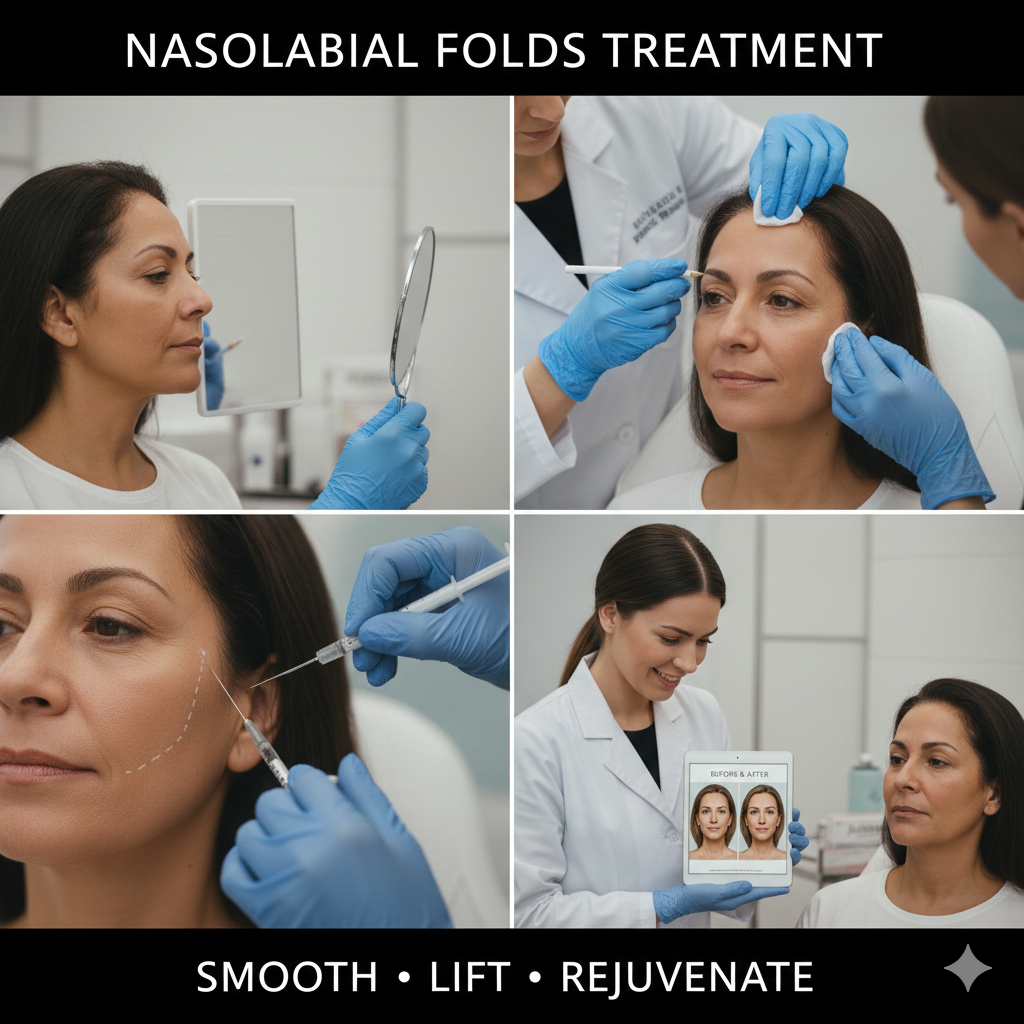
Nasolabial lines (also called smile lines or laugh lines) are the folds that run from the sides of the nose to the corners of the mouth. They are a natural part of facial expression but can become deeper and more noticeable with age, giving the face a tired or aged appearance.
What Causes Nasolabial Lines?
Natural aging and loss of collagen & elastin
Loss of mid-face (cheek) volume
Repeated facial movements (smiling, talking)
Skin laxity and gravity
Sun damage
Genetics
Lifestyle factors (smoking, dehydration)
How Nasolabial Lines Are Treated
Treatment focuses on supporting the face, not just filling the line.
1. Dermal Fillers (Most Effective)
Hyaluronic acid fillers restore volume and soften folds
Often placed in the cheeks first to lift the area naturally
Direct line treatment may be added if needed
2. Skin Boosters
Improve skin quality and elasticity
Best for mild or early lines
Enhances overall results when combined with fillers
3. Anti-Wrinkle Injections
Used selectively to relax muscles contributing to fold depth
Prevents lines from worsening
Benefits of Treating Nasolabial Lines
✔ Softens deep folds
✔ Restores youthful facial contours
✔ Improves facial balance
✔ Natural-looking rejuvenation
✔ Non-surgical and minimally invasive
✔ Immediate improvement with fillers
Time Duration of the Treatment
Procedure time: 30–45 minutes
Results visible: Immediately
Final results: After swelling settles (7–14 days)
Duration of results: 9–18 months (depending on product, area, and metabolism)
Side Effects
Usually mild and temporary.
Common Side Effects
Swelling
Redness
Bruising
Tenderness
Rare Side Effects
Lumps or unevenness
Asymmetry
Vascular complications (very rare)
⚠️ Choosing an experienced injector significantly reduces risks.
Aftercare Instructions
Avoid touching or massaging the area for 24–48 hours
Avoid strenuous exercise and heat exposure for 24–48 hours
Avoid makeup for 24 hours
Sleep on your back the first night if possible
Who Is a Good Candidate?
Individuals with noticeable smile lines
People experiencing mid-face volume loss
Those wanting non-surgical facial rejuvenation
Not Recommended For
Pregnant or breastfeeding women
Active skin infections
Certain medical conditions (consultation required)
Important Factors to Know
Cheek support is key for natural results
Overfilling the line alone can look heavy or unnatural
Combination treatments often give best results
Maintenance treatments are required
Results vary based on facial structure and lifestyle